In some cases, we approach the data with a certain relationship in mind. One may think of a human brain acts as a machine learning algorithm searching for patterns. Yet, these patterns may be biased by our own willingness to find certain relationships in the data, which fit our ideas. One of such examples subject to debate is the relationship between economic inequality and adoption of digital currencies, novel to the literature: Is the propensity to mine and use bitcoins higher in egalitarian societies? Or, perhaps, unequal societies tend to adopt bitcoins more? More
Consumer Price Inflation Targeting – Instruments and their Effectiveness
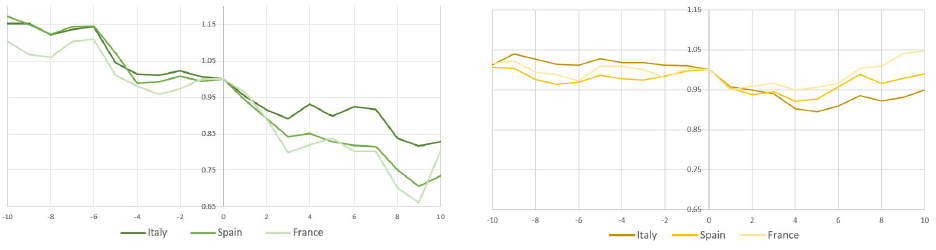
The European Central Bank (ECB) currently conducts a strategy review within its framework of inflation targeting that aims at consumer prices. In this context, the ECB not only assesses the effectiveness of its policy instruments but also revisits its inflation target that is at the core of monetary policy (Lagarde 2020). The ECBs toolbox to influence consumer prices includes interest rates, asset purchases and monetary policy communication. But are these policy instruments still effective in affecting consumer prices given the current environment? More
The Hamiltonian Moment still has no Bazooka
The announcement effect of the European Council’s rescue plan had significantly less influence on the decline in government bond spreads than the “Whatever it takes”-speech by Mario Draghi. Still, this fiscal event has often been referred to as the Hamilton moment. More
Attention allocation, macroeconomic expectations, and consumption behavior
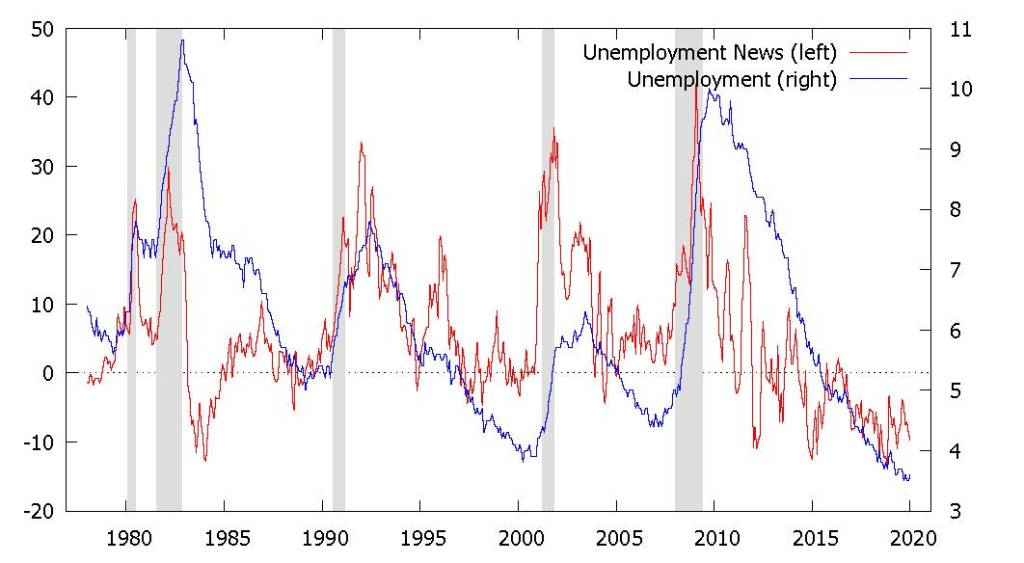
This paper empirically investigates individuals‘ attention allocation behavior and its economic implications on expectation formation and consumption choice. We measure attention with data from the Michigan Survey of Consumers (MSC), in which respondents were asked to report what economic news they heard recently. More
2020
European Recovery Fund: Hamiltonian moment to financial markets, too?
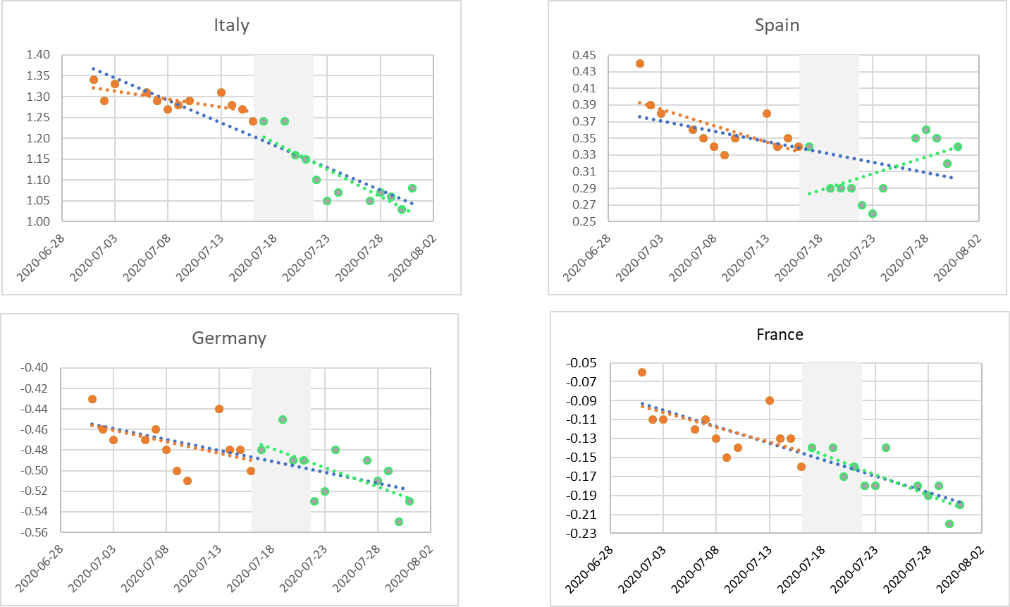
The Recovery Plan has been celebrated as the European Hamiltonian moment. Financial markets also responded to the negotiations and the announcement on July 21st. Whether it is a true completion of the monetary and fiscal union, however, remains questionable to the markets. More
How does monetary policy in the United States affect the Euro Area?
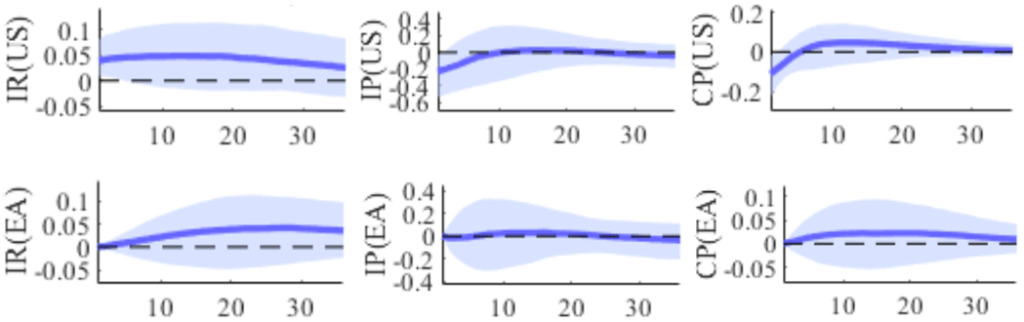
When the central bank of the United States takes monetary policy decisions there are direct economic implications for the Euro Area. The impact of increasing interest rates on industrial production and consumer prices in the Euro Area is small and positive. These contractionary monetary shocks also lead to a Euro appreciation and a deterioration of the trade balance. More
A new CBDC will be born: Welcome Digital Euro!
The upcoming Digital Euro, highly discussed in the autumn conference 2020 by the Deutsche Bundesbank, is expected to be introduced by the European Central Bank (ECB). How will the Digital Euro affect our everyday life and do we want/need it? More


 moneyathohenheim.blog